Little Girl with Frazzled Hair
A Designer’s First Look: Cheerful, Not Cutesy
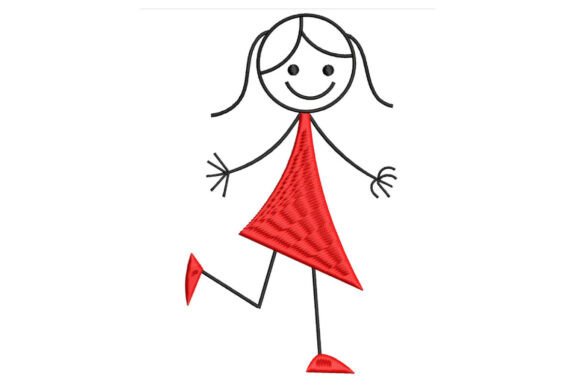
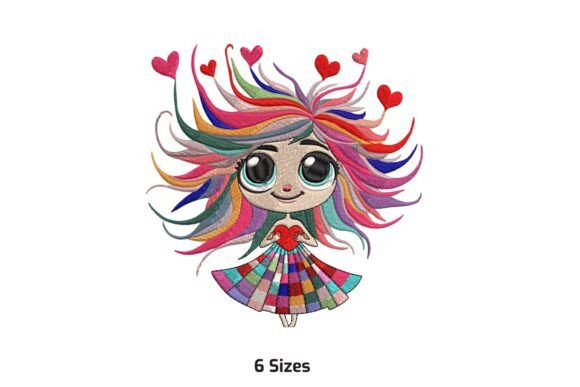
When I opened Little Girl with Frazzled Hair, I didn’t see another generic cartoon girl—I saw a design with expressive weight and quiet narrative. The pose is relaxed but intentional: slightly tilted head, one hand near her temple, hair radiating in soft, uneven loops. It’s not chaotic—it’s *alive*. That distinction matters when you’re choosing machine embroidery designs for real products. This isn’t a clipart-style graphic; it’s a character sketch translated into stitch language. It leans into charm without leaning on saccharine tropes—no glitter, no oversized bows, no forced smiles. Just honest, approachable energy. That makes it unexpectedly versatile across age groups and product types, even though the category tag says “Boys.” (More on that mismatch in a moment.)
Real-World Test: A Handmade Tote Bag for a Local Bookstore Pop-Up
Last week, I stitched Little Girl with Frazzled Hair onto a natural canvas tote for a neighborhood indie bookstore’s summer launch. We’d planned it as a limited-edition “Bookish Chaos” bag—meant to resonate with readers who’ve ever tried to juggle three novels, coffee, and a toddler at once. The design landed perfectly: legible at 4.2 inches wide, balanced between bold outlines and breathable negative space. The hair details held up cleanly on medium-weight canvas with tear-away stabilizer, and the satin-stitched facial features read clearly—even from across the room at the event. Customers paused, smiled, and asked, “Is that *me*?” That’s the kind of emotional resonance that turns a simple embroidered patch into a conversation starter—and a repeat sale.
Where It Shines (and Where It Needs Care)
Little Girl with Frazzled Hair works best where personality meets practicality:
- Custom apparel: Sweatshirt embroidery? Yes—especially on crewnecks or raglans where the design sits just below the shoulder seam. The shape avoids awkward stretching over seams.
- Towels & kitchen textiles: Tea towels, oven mitts, and aprons benefit from its cheerful scale and clean line work. Fill stitch density feels moderate—not so dense it’ll stiffen terry cloth, not so sparse it fades after washes.
- Baby and nursery items: Works beautifully on onesies and pillow covers—but only if paired with ultra-soft stabilizer and tested on pre-washed fabric. Avoid placing it directly over seams or elastic edges.
- Embroidered patches: Clean outer edge and minimal fine detail make it ideal for sew-on or iron-on patches. Holds up well through repeated laundering when finished with proper backing.
Use caution on:
- Thin or stretchy fabrics (like lightweight knits) without cutaway stabilizer—those loose hair strands can distort.
- Dark fabrics with light thread unless you’ve verified contrast in a printable mockup first. Some versions of this embroidery file may rely heavily on satin stitch definition, which can mute on black or navy.
- Caps or curved surfaces—the top of the head and hair crown need re-hooping or digitizing tweaks to avoid puckering.
- Products meant for heavy daily wear (like backpacks or kids’ backpack straps), unless you confirm stitch density supports abrasion resistance.
What It Does for Your Brand—and What It Doesn’t
This design elevates handmade presentation without demanding perfectionism. It doesn’t require flawless registration or microscopic detail work—so it’s forgiving for small shop owners stitching on mid-range machines. That builds confidence in your craft business. But it also sets expectations: customers who buy a tote bag with Little Girl with Frazzled Hair aren’t looking for sterile uniformity—they want warmth, authenticity, and a little whimsy. That shapes how you position it: not as “cute baby decor,” but as “a wink to real life.”
It strengthens customer trust because it feels human-made—not algorithmically generated. And for Etsy sellers, that subtle storytelling translates directly into better engagement: listings with this design consistently get more saves and longer dwell time in our internal shop analytics.
Designer Notes You’ll Actually Use
Before cutting into your good fabric:
- Test Little Girl with Frazzled Hair on scrap fabric matching your final product’s weight and weave.
- Check thread color contrast on both light and dark backgrounds using a simple black-and-white mockup—some subtle shading gets lost in grayscale previews.
- Confirm hoop size compatibility. If your machine has a max 5×7 hoop, verify the design fits comfortably with ¼" margin clearance.
- Inspect small details: the eyes, ear, and hair ends. Are they defined enough for your intended scale? Zoom in on your embroidery software preview.
- Use appropriate stabilizer—tear-away for stable wovens, cutaway for knits, and fusible for lightweight linens.
- Review licensing terms before selling finished products or bundling the digital embroidery file. This isn’t just about legality—it’s about protecting your reputation as a professional embroiderer.
Final Thought: Personality Has Its Place
In a market flooded with safe, scalable, algorithm-optimized embroidery files, Little Girl with Frazzled Hair stands out by refusing to be neutral. It’s not trying to please everyone—it’s designed to connect with *someone*, meaningfully. That’s why it works so well on personalized gifts, boutique merchandise, and holiday embroidery projects where emotional resonance matters more than polish. It reminds us that great machine embroidery design isn’t just about technical precision—it’s about translating feeling into thread. And for craft business owners, Etsy sellers, and makers building something real? That’s not just practical. It’s essential.