Horse Girl Embroidery Design
First Impression: Whimsy with Quiet Confidence
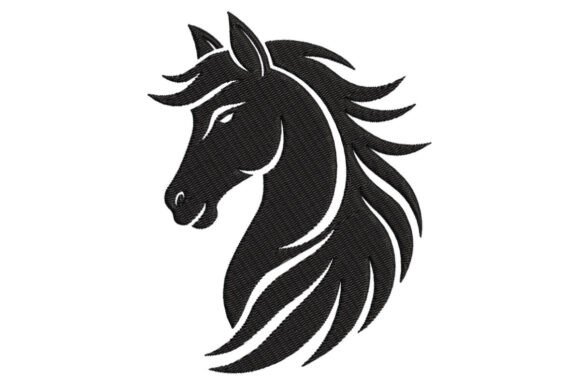
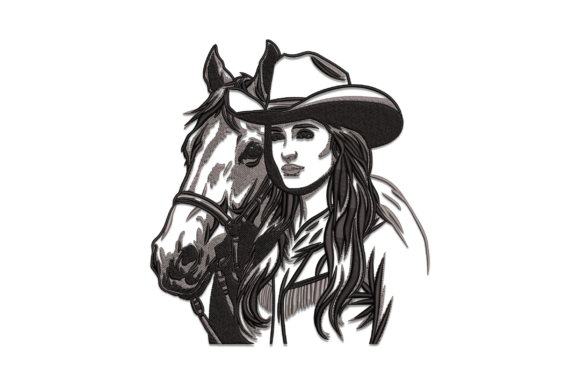
When I opened Horse Girl for the first time, I didn’t see a generic equestrian motif—I saw a design that breathes. It’s not overly literal or cartoonish, nor is it stiffly formal. There’s a gentle curve to the girl’s posture, a softness in the horse’s neck line, and just enough detail in the mane and braid to suggest movement without crowding the stitch field. This isn’t a design shouting for attention; it’s one that invites pause. That matters—especially when you’re stitching for someone who’ll carry it on a tote bag across town or hang it above a nursery crib.
A Real Project Test: The Custom Tote Bag Launch
Last week, I prepped Horse Girl for a small-batch order of linen-cotton tote bags—intended as boutique gifts for a local riding school’s spring fundraiser. I chose a mid-sized hoop (5x7") and paired it with medium-weight cutaway stabilizer. Right away, the layout made sense: the composition fits cleanly within standard tote front panels, leaves room for optional monogramming below, and avoids awkward edge distortion. The satin-stitched outlines held crispness on the textured fabric, while the fill stitches settled evenly—no piling or thinning. Customers responded strongly to how “handmade but polished” it looked—not too busy, not too sparse. That balance is rare in horse-themed embroidery files.
Where It Shines (and Where It Asks for Thought)
Horse Girl works beautifully on:
- Sweatshirts and hoodies — its moderate stitch density doesn’t overwhelm fleece backing, and the silhouette reads clearly even at arm’s-length distance;
- Pillow covers and framed wall art — the clean negative space around the figures gives breathing room, making it feel intentional rather than cramped;
- Baby items and nursery decor — the gentle scale and absence of sharp angles make it ideal for onesies, blankets, or wall hangings where softness reads as care;
- Tote bags and aprons — it sits comfortably on curved seams and handles well on vertical grain fabrics like canvas or twill;
- Etsy listings and craft fair merchandise — it photographs well in natural light, translates cleanly to printable mockups, and signals “thoughtful handmade” without needing explanation.
But—and this is where experience kicks in—Horse Girl asks for intentionality in a few spots:
- On stretchy knits (like t-shirts), use tear-away + light cutaway stabilizer combo—those flowing hair and mane lines can blur if the fabric shifts mid-stitch;
- For dark fabrics, test thread contrast first. Some lighter fill areas may need a tone-up in thread choice—not just white, but ecru or oatmeal—to avoid looking washed out;
- It’s not ideal for tiny hoops under 4x4" unless simplified—fine details like the braid texture and horse’s eye rely on minimum stitch resolution;
- Avoid dense layering on curved surfaces like caps unless you’re using a cap frame and have tested stitch tension carefully—the shoulder curve can compress the lower half of the design.
What It Does for Your Craft Business
As an embroidery designer who also consults with Etsy sellers and small shop owners, I watch how a design affects buyer trust—and Horse Girl builds it. It doesn’t look mass-produced or clip-art-derived. When stitched cleanly, it reads as a considered choice—not filler. That lifts perceived value on handmade products, especially personalized gifts. A customer buying a custom sweatshirt with Horse Girl isn’t just getting “a horse design.” They’re getting something that feels quietly meaningful, gender-inclusive in its quiet strength, and timeless enough to wear beyond seasonal trends.
For digital product sellers: this design holds up well in preview thumbnails and listing banners. Its clear silhouette scales cleanly down for social media tiles, and its balanced proportions mean it won’t get cropped awkwardly on mobile. Just be sure your licensing terms align with how buyers plan to use it—commercial embroidery rights aren’t automatic, and clarity here prevents friction later.
Practical Designer Notes You’ll Actually Use
Before stitching Horse Girl into your next project, do these five things:
- Test on scrap fabric—especially if you’re using a new stabilizer blend or thread brand. Watch how the satin stitch wraps corners and how fill areas settle on your target textile;
- Check thread color contrast in both daylight and indoor lighting—some pastel threads lose definition on off-white linen or heather grey;
- Review stitch density visually in your embroidery software. If fill areas look overly tight or sparse, adjust density slightly before hooping;
- Confirm hoop size compatibility—if you only work with 4x4" hoops, verify whether the design has a smaller version or if editing (e.g., slight scaling) maintains integrity;
- Use proper stabilizer—cutaway for stable wovens, tear-away + light cutaway for knits, and water-soluble film for delicate layers like tea towels or lace overlays.
Final Thought: Not Just Another Horse Design
Horse Girl stands apart because it respects the viewer’s intelligence and the maker’s time. It doesn’t overpromise. It doesn’t demand special equipment or endless tweaks. It delivers what it implies: a quiet, confident celebration of connection—between rider and horse, maker and material, gift-giver and recipient. Whether you’re stitching it onto a baby blanket for a barn wedding, embroidering a set of kitchen towels for a country boutique, or adding it to your Etsy shop as a ready-to-ship digital embroidery file, Horse Girl carries weight without heaviness. That’s the mark of a design that’s truly project-ready—not just pretty on screen, but trusted in real life.