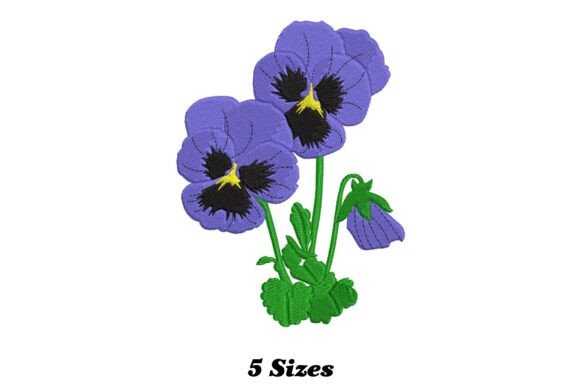
Delicate Pansy Flower
A Quiet Bloom That Earns Its Place on Real Projects
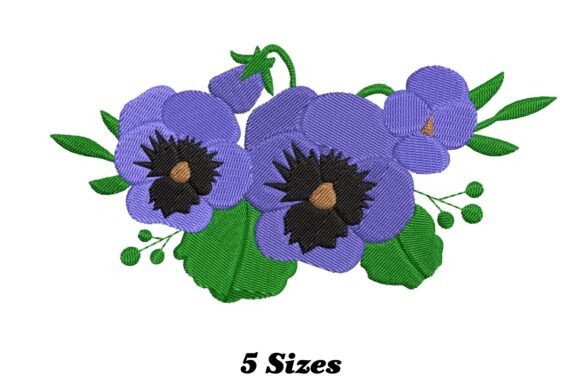
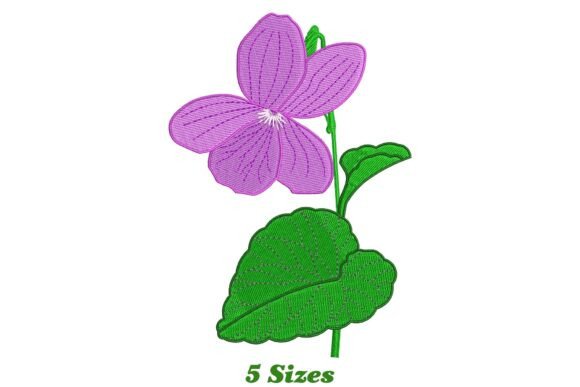
As someone who’s stitched hundreds of floral motifs—from bold peonies to minimalist daisies—I opened Delicate Pansy Flower expecting charm, but not quite the quiet confidence it carries. It’s not flashy. It doesn’t shout. Instead, it leans in with soft curves, asymmetrical petal placement, and a subtle sense of movement—like a pansy caught mid-breeze on a sunlit windowsill. This isn’t a filler design. It’s a statement made through restraint: three overlapping petals, a gentle center detail, and just enough line work to suggest depth without crowding the stitch field. For a Single Flowers category entry, it avoids cliché by favoring botanical authenticity over cartoonish symmetry.
How It Lives on Actual Fabric—Not Just Screens
Last week, I used Delicate Pansy Flower to embroider a set of linen tea towels for a local boutique. No mockups—just real fabric, real thread (40-weight cotton), and my standard tear-away + light cut-away stabilizer combo. The result? A clean, breathable stitch that held its shape after two washes and ironing. It performed especially well on medium-weight woven fabrics—think chambray tote bags, cotton sweatshirt fronts, and baby muslin swaddles. On those surfaces, the design’s modest scale and balanced stitch density kept it from feeling stiff or plasticky. Customers noticed it immediately—not as “cute,” but as considered. One buyer even asked if it was hand-drawn first. That’s the kind of impression this machine embroidery design earns when executed well.
Where It Shines—and Where It Asks for Extra Care
Delicate Pansy Flower is naturally suited to personalized gifts and small shop products: a single bloom on the chest of a newborn onesie, centered on a canvas apron pocket, or nested beside monogrammed initials on a holiday pillow cover. It also works beautifully as a standalone embroidered patch when stitched onto twill or denim—its organic outline holds up to light fraying at the edges without looking unfinished.
But here’s what I watched closely: on stretchy jersey (like a lightweight t-shirt), the outer petals softened slightly unless I added a floating stabilizer layer. On dark fabric, I switched to matte ecru thread instead of white—it preserved the design’s delicate mood without glare. And on curved surfaces like structured caps? I avoided placing it near the crown seam; the slight distortion there blurred the petal tips. If you’re using it for commercial embroidery, test it on your most common fabric stack first—especially if you’re bundling it into digital embroidery files for Etsy sellers or craft fair vendors.
What It Adds Beyond Aesthetics
This isn’t just about prettiness. Delicate Pansy Flower quietly lifts perceived value. On an otherwise plain kitchen towel, it signals care—not just decoration. For an Etsy seller, that translates to higher conversion on listings where buyers scroll past generic florals but pause at something that feels hand-selected. It supports brand consistency too: pair it with neutral thread palettes and consistent hoop placement, and suddenly your entire line of handmade products reads as intentional, not pieced together. And yes—it boosts giftability. I’ve seen customers choose it over bolder designs for wedding favors and nursery decor because it whispers “thoughtful” rather than “festive.”
Designer Notes You’ll Want Before Stitching
- Always test on scrap fabric first—especially if you’re using textured weaves or blends. Linen, terry cloth, and brushed cotton all interact differently with its satin-stitched petal edges.
- Check thread color contrast carefully. This design relies on tonal nuance—not high-contrast pop—so avoid neon or metallic threads unless you’re intentionally subverting its mood.
- Review stitch density before scaling. Enlarging beyond 110% risks filling in fine negative space; shrinking below 85% may cause under-stitching in the center detail.
- Confirm hoop size compatibility with your machine’s throat space—its natural layout fits comfortably in a 4x4 hoop, but verify clearance if stitching near seams or pockets.
- Inspect small details at actual stitch-out size. The subtle veining in the lower petal only reads clearly with sharp needle tension and steady feed dogs.
- Test black-and-white mockups before finalizing product photos—this design gains clarity in grayscale, making it versatile for print catalogs or minimalist branding.
- Use proper stabilizer for your base fabric. Lightweight cut-away works best for knits; tear-away suffices for stable wovens like quilting cotton or canvas.
- Verify licensing terms before including Delicate Pansy Flower in digital product bundles or selling finished items commercially—some versions allow unlimited use, others restrict resale of stitched goods.
Final Thought: A Design That Grows With Your Work
I keep Delicate Pansy Flower in my go-to folder—not because it’s easy, but because it’s honest. It doesn’t mask poor technique or flimsy materials. It rewards attention: to thread choice, to stabilizer balance, to placement rhythm. Whether you’re building a craft business, designing printable mockups for fellow designers, or stitching one-of-a-kind baby embroidery for a friend, this embroidery file asks only that you meet it halfway. And in return, it delivers quiet professionalism, unexpected warmth, and a finished product that feels like it belongs—not just stitched on, but grown into the fabric itself.