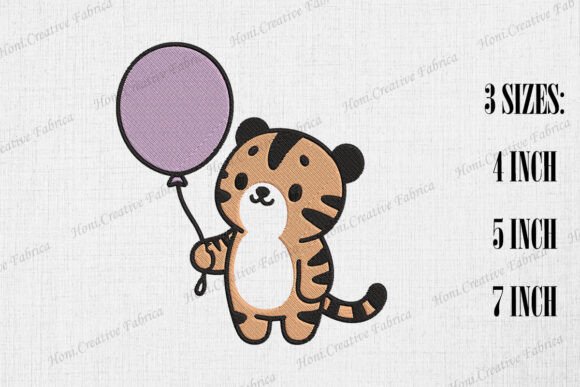
Cute Tiger with Balloon
First Impression: Playful, Warm, and Instantly Approachable
As an embroidery designer who’s prepped over 200 craft fair booths—and watched thousands of shoppers pause at a table—I’ll say it straight: Cute Tiger with Balloon lands with cheerful clarity. It’s not fierce or hyper-realistic. It’s not minimalist or abstract. It’s soft-cute: round cheeks, gentle curves, a balloon that floats—not strains—upward. That balloon adds motion and lightness; it turns a wild animal into a friendly companion. Think farmhouse charm meets modern nursery energy. It reads as joyful, handmade, and gift-ready—not costume-y or cartoonish. For craft fairs and handmade markets, that first emotional hook matters more than technical perfection.
Where Cute Tiger with Balloon Shines on Real Products
This design thrives where personality meets utility. Here’s how it performs across your most common craft fair lineup:
- Tote bags: Perfect as a centered chest motif (4–5" wide). The tiger’s face anchors the eye, and the balloon lifts the composition—no need for extra embellishment.
- Aprons: Ideal above the pocket or centered on the bib. Its balanced proportions avoid visual heaviness, even on full-coverage cotton twill.
- Tea towel embroidery: Works beautifully in the lower corner or mid-panel. The balloon’s upward line guides the gaze naturally toward the towel’s hanging loop—subtly reinforcing function.
- Embroidered patches: A standout when heat-applied to denim jackets or backpacks. At 2.5–3", the tiger retains expression without losing stitch integrity.
- Fabric pouches & pillow covers: Scales well as a single focal point—no competing motifs needed. Customers consistently choose pieces with clear, friendly faces over ornate filler patterns.
- Caps & market bags: Use with caution. On curved cap fronts, test placement early—the balloon’s thin string may distort if stitched too low. For canvas market bags, keep it under 4.5" wide to maintain legibility from a distance.
What Makes Cute Tiger with Balloon Sell—Beyond Cuteness
It’s not just adorable—it’s strategically readable. At booth distance (3–6 feet), shoppers instantly recognize: tiger + balloon = joy + celebration. No decoding required. That clarity drives impulse buys, especially for baby shower gifts, teacher appreciation bundles, or “just because” handmade tokens. Online, Cute Tiger with Balloon photographs cleanly—even on textured towels—because its shapes are bold and its negative space generous. As an Etsy seller or small shop product, it pairs effortlessly with neutral backdrops and natural lighting. And yes—it feels repeatable. You can produce 12 embroidered tea towels in an afternoon without visual fatigue or quality drift. That consistency builds trust in your handmade brand.
Careful-Use Notes for Reliable Production
Even charming designs have limits. Before batch-producing, watch for:
- Dense stitch areas: The tiger’s fur texture (if present) or balloon shading may increase stitch density. Test on your target fabric—especially terry cloth or thick linen—to avoid puckering or thread breakage.
- Tiny details: Avoid shrinking below 2" wide. Eyes, nose, or balloon string may blur or vanish on dark fabric or high-pile textiles.
- Curved surfaces: Caps and pouch gussets demand precise hooping. Use adhesive stabilizer + light tear-away to prevent shifting.
- Fabric texture: On highly textured kitchen towels, consider simplifying background fill or opting for satin-stitch outlines only—clarity trumps complexity.
Design Strengths That Boost Your Booth & Brand
Cute Tiger with Balloon elevates your display in three quiet but powerful ways: First, it adds visual rhythm—its upward balloon line creates movement amid static items like mugs or candles. Second, it signals handmade quality without looking “crafty” or amateurish. Third, it supports brand consistency: whether on a $28 tote or a $14 patch, it reads as part of the same thoughtful collection—not a one-off download.
For Etsy sellers and digital embroidery file creators, this design also works hard behind the scenes. It’s highly searchable (“tiger embroidery,” “cute animal machine embroidery,” “balloon design”) and fits cleanly into seasonal collections—think spring baby showers, summer camp gifts, or birthday bundles. As a Wild Animals category piece, it avoids cliché while staying recognizable. That balance is rare.
Essential Embroidery Designer Checks Before You Stitch
Before cutting fabric or loading hoops, run these checks:
- Test on scrap fabric matching your final product’s weight and weave—especially for t-shirts or baby onesies.
- Check thread contrast against your base color. Light threads on cream linen? Rich. Same threads on charcoal? Nearly invisible.
- Review spacing and stitch density in your embroidery software—look for tight corners or overlapping fills that could snag.
- Confirm hoop size compatibility with your machine and intended product (e.g., cap frames vs. standard hoops).
- Choose stabilizer intentionally: cut-away for knits, tear-away for stable wovens, mesh for lightweight linens.
- Create at least one real mockup—not just a printable mockup. See how light hits the stitches in person.
- Compare fabric colors side-by-side—dye lots vary, and what looks warm on screen may read cool under market tent lighting.
- Verify commercial licensing before selling finished products. If the digital embroidery file includes usage terms, read them. This isn’t just legal—it’s ethical craftsmanship.
Final Thought: A Design That Works as Hard as You Do
Cute Tiger with Balloon isn’t flashy—but it’s dependable. It draws smiles, converts browsers into buyers, and holds up across dozens of handmade product types without demanding special treatment. In a crowded craft fair aisle or a saturated Etsy search, that reliability is gold. It lets you focus on what matters most: connecting with customers, refining your process, and building a business rooted in quality, warmth, and genuine handmade care. Now—hoop up, stabilize well, and stitch with confidence.