Kawaii Cartoon Hot Cocoa Applique
As a designer who’s stitched hundreds of embroidery files for client projects, Etsy shops, and boutique merchandise, I opened the Kawaii Cartoon Hot Cocoa Applique with one question: *Does this hold up—not just on screen, but on fabric, under thread, in real hands?*
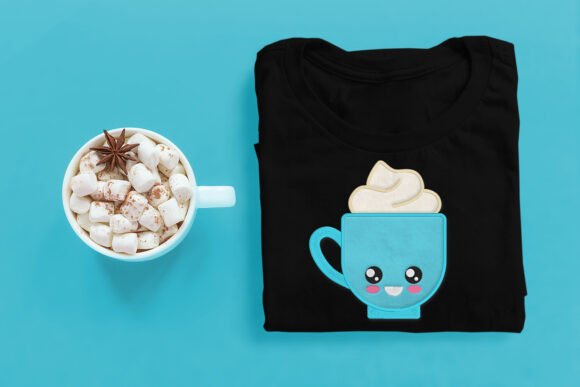
First impression? Instant warmth. Not just because of the theme—steaming cocoa, pillowy whipped cream—but because the shape is generous, friendly, and intentionally uncluttered. The kawaii face adds charm without crowding; more importantly, the option to skip the face steps gives real flexibility for baby items, minimalist branding, or monochrome holiday collections. This isn’t a novelty doodle—it’s a considered applique design built for repetition, recognition, and resale.
Where It Lives Best: Real Projects, Not Just Mockups
Last week, I prepped a batch of organic cotton tote bags for a local café’s holiday pop-up. We needed something cozy but not cutesy, seasonal but not dated. The Kawaii Cartoon Hot Cocoa Applique landed perfectly centered on the front panel—3.5-inch size, black thread on oat-colored canvas. It stitched cleanly, held its curves, and read clearly from six feet away. Customers paused. Smiled. Asked about the maker. That’s the quiet power of a well-balanced machine embroidery design: it invites connection before a word is spoken.
It shines just as strongly on sweatshirt embroidery—especially mid-weight French terry. The cup’s rounded base anchors well on curved surfaces, and the whipped cream’s soft edges translate beautifully in satin stitch without puckering. For baby embroidery? The 2-inch version works cleanly on onesies (with light cutaway stabilizer), and skipping the face keeps it gentle for sensitive skin and neutral nursery palettes. As an embroidered patch? Yes—especially when fused to denim aprons or canvas backpacks. The design’s compact height-to-width ratio means it won’t overwhelm smaller garments or accessories.
Fabrics & Finishes: Know When to Lean In—or Step Back
This embroidery file performs best on stable, medium-weight fabrics: twill, quilting cotton, brushed poly, and midweight knits with proper stabilization. On thin fabric like voile or lightweight rayon, I’d add tear-away *under* and light cutaway *on top*, especially around the whipped cream’s outer curve—dense satin areas can distort delicate weaves.
Stretchy fabric? Proceed with caution—and test first. The cup’s vertical lines hold better than diagonal motifs, but the face’s small eyes (if used) rely on tight registration. I wouldn’t run it on high-stretch jersey without digitized stretch compensation, which this file doesn’t advertise. Likewise, dark fabric demands thoughtful thread color contrast: a creamy off-white or warm beige works better than stark white for depth, and avoids the “glowing ghost” effect on navy or charcoal.
Curved surfaces—like caps or beanies—require hooping precision. The 2.75-inch size fits most standard cap hoops comfortably, but avoid placing it too close to the bill seam. And while the design avoids tiny lettering or micro-details, the whipped cream’s inner swirl does tighten at the smallest size (1.8 inches). If you’re stitching for a craft fair where buyers inspect up close, stick to sizes 2.2 inches and up for clarity.
What It Adds to Your Handmade Product—Beyond Cuteness
Let’s be honest: kawaii themes risk feeling juvenile or fleeting. But the Kawaii Cartoon Hot Cocoa Applique sidesteps that by leaning into warmth, simplicity, and versatility. It elevates a plain tea towel into a giftable kitchen staple. It turns a basic sweatshirt into a curated, story-driven piece—ideal for coffee shops, bookstores, or wellness brands building a cozy aesthetic.
For Etsy sellers and small shop owners, this design supports multiple listings with minimal variation: same file, different thread colors, different placements (pocket vs. chest), face-on or face-off. That’s efficiency with intention. And because it reads well in both color and grayscale mockups, it scales cleanly across digital product previews, social posts, and printable packaging labels.
Most importantly, it builds customer trust. Cleanly stitched, balanced proportions, and thoughtful density signal professionalism—not just hobbyist energy. Buyers notice when whip cream looks fluffy, not flat; when the mug’s handle has weight, not wisps. That perceived quality lifts your entire handmade product line.
Designer Notes You’ll Actually Use
- Always test on scrap fabric first—especially if using textured fabric like waffle weave tea towels or looped terry.
- Check stitch density visually—zoom in on the whipped cream’s edge in your embroidery software. If fill stitch overlaps heavily near the curve, consider reducing density by 5–8% for smoother flow.
- Confirm hoop size before stitching. With 6 sizes included, it’s easy to load the wrong one—double-check your machine’s max hoop dimensions against the file name.
- Inspect small details at actual size. The kawaii eyes are charming, but they’re also potential snag points on baby items—run a finger over the finished stitch-out to confirm smoothness.
- Test on both light and dark backgrounds. A single thread color may flatter oat but fade on black—adjust accordingly.
- Use appropriate stabilizer: light cutaway for knits, tear-away for stable wovens, and fusible + tear-away combo for nap-heavy fabrics like fleece.
- Verify licensing terms before selling finished items or bundling the digital embroidery file in kits—this matters for craft business scalability.
The Kawaii Cartoon Hot Cocoa Applique isn’t just another holiday-themed embroidery file. It’s a quietly versatile tool—one that fits seamlessly into custom apparel, nursery decor, boutique branding, and heartfelt personalized gifts. It works because it was designed with fabric in mind, not just pixels. And in a market flooded with rushed digital assets, that kind of intention is rare—and valuable.