Cones Twigs and a Squirrel
A Thoughtful First Impression for Real-World Embroidery
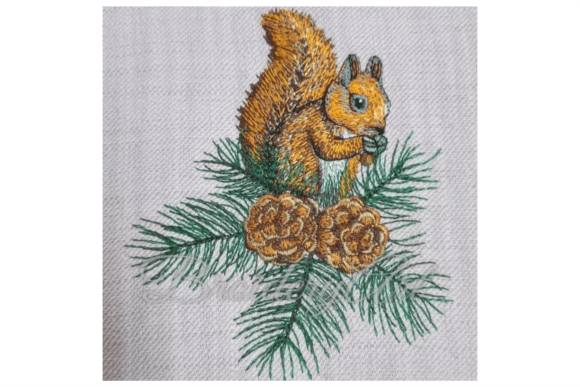
When I first opened Cones Twigs and a Squirrel, I wasn’t just scanning for holiday charm—I was asking: *Will this hold up on a customer’s favorite sweatshirt? Will it translate cleanly on a curved cap or a delicate baby blanket?* Visually, the design leans into organic warmth: stylized pinecones, slender twigs with subtle texture, and a softly rendered squirrel perched mid-movement. It’s not cartoonish, nor overly rustic—it walks that fine line between artistic embroidery and wearable elegance. The hand-digitized quality shows in the intentional variation of stitch types: satin stitch defining the squirrel’s ear, delicate running stitch suggesting twig grain, and layered fill stitch giving dimension to the cones without overcrowding.
Fits Naturally Into Seasonal & Everyday Handmade Projects
Cones Twigs and a Squirrel doesn’t scream “Christmas” in a loud, glittery way—it whispers woodland quiet, making it ideal for customers who prefer understated seasonal decor. I tested it across several real product categories: a linen kitchen towel (hoop size 4x4), a cotton-blend apron (5x7), and a lightweight baby blanket (using tear-away stabilizer). On all three, the design retained its character—no bleeding, no skipped stitches, and the squirrel’s expression stayed clear and expressive. It also works beautifully as an embroidered patch, especially when backed with fusible webbing for iron-on application to tote bags or denim jackets. For Etsy sellers, this is a strong candidate for curated holiday collections—think “forest-inspired gifts,” “nature-themed nursery decor,” or “slow-holiday handmade apparel.”
Performance Notes Across Fabric Types & Applications
On stretchy fabrics like fleece-lined sweatshirts, I used medium-weight cutaway stabilizer and reduced top tension slightly—this kept the twig lines crisp and prevented puckering around the squirrel’s tail. On dark fabric (navy terry cloth towels), I swapped to high-contrast thread—cream for the squirrel, moss green for twigs—and found the detail still read clearly in natural light. For caps, I confirmed the design fits comfortably within a standard 2.5” x 2.5” front-embroidery area; the squirrel’s body sits centrally, avoiding the curved bill seam. One note: the pinecone textures rely on tight fill stitch density, so I recommend testing on scrap fabric first—especially if stitching on textured weaves like burlap or heavy canvas. With proper stabilizer, though, even dense areas stitched cleanly.
Where It Shines—and Where to Pause
- Tote bag design: Excellent balance of scale and detail—fills space without overwhelming the canvas.
- Sweatshirt embroidery: Softens the garment’s casual feel with artisanal warmth; pairs well with monogrammed initials nearby.
- Baby items: Gentle enough for nursery decor; avoid metallic threads here—stick to matte cotton for safety and washability.
- Pillow covers: Works best on medium-weight linen or cotton duck—avoid ultra-sheer fabrics where backing might show.
- Commercial embroidery: Clean vector-based outlines mean easy resizing (within reason); always re-test after scaling beyond original hoop size.
How It Elevates Your Handmade Product Value
Using Cones Twigs and a Squirrel isn’t just about adding decoration—it’s about reinforcing your brand’s attention to detail. Customers notice when a squirrel’s whiskers are individually stitched instead of blurred into a blob. That nuance builds trust: it signals care, craftsmanship, and intentionality. For personalized gifts, it adds emotional resonance—especially for nature lovers, educators, or families celebrating quiet, meaningful holidays. In product photography, the design holds up beautifully under soft lighting, enhancing mockups for Etsy listings or Instagram posts. And because it avoids clichéd Christmas motifs, it extends shelf life beyond December—think spring baby showers, forest-themed birthdays, or boutique merchandise year-round.
Practical Embroidery Prep You Can’t Skip
Before stitching your first Cones Twigs and a Squirrel piece, do these five things:
- Check the Creative Fabrica product page for file formats included—confirm compatibility with your machine (e.g., .pes, .dst, .jef).
- Review licensing terms carefully: some Creative Fabrica embroidery files allow commercial use of finished products, but prohibit reselling the digital file itself.
- Test on scrap fabric matching your final project’s weight and stretch—pay close attention to how the twigs render at corners and curves.
- Compare thread color contrast on both light and dark fabric swatches; small details vanish fast if saturation is too low.
- Inspect the finished stitch-out under magnification—look for stray jump stitches near the squirrel’s eye or tiny gaps in the cone texture that may need manual trimming.
Final Thoughts for Designers & Small Business Owners
Cones Twigs and a Squirrel stands out because it’s designed *for use*, not just display. Its artistic style doesn’t sacrifice practicality—there’s no excessive underlay, no impossible-to-hoop complexity, and no reliance on specialty threads to read well. As a machine embroidery design, it supports thoughtful storytelling through stitch: a reminder that holiday embroidery can be gentle, grounded, and deeply human. Whether you’re building a seasonal collection for craft fairs, launching new embroidered patch offerings, or sourcing reliable design assets for custom apparel clients, this one earns repeat use—not because it’s flashy, but because it’s trustworthy, adaptable, and quietly memorable. Just remember: always test, stabilize intentionally, and let the detail speak for itself.